Menu
West3D 3D Printing Supplies

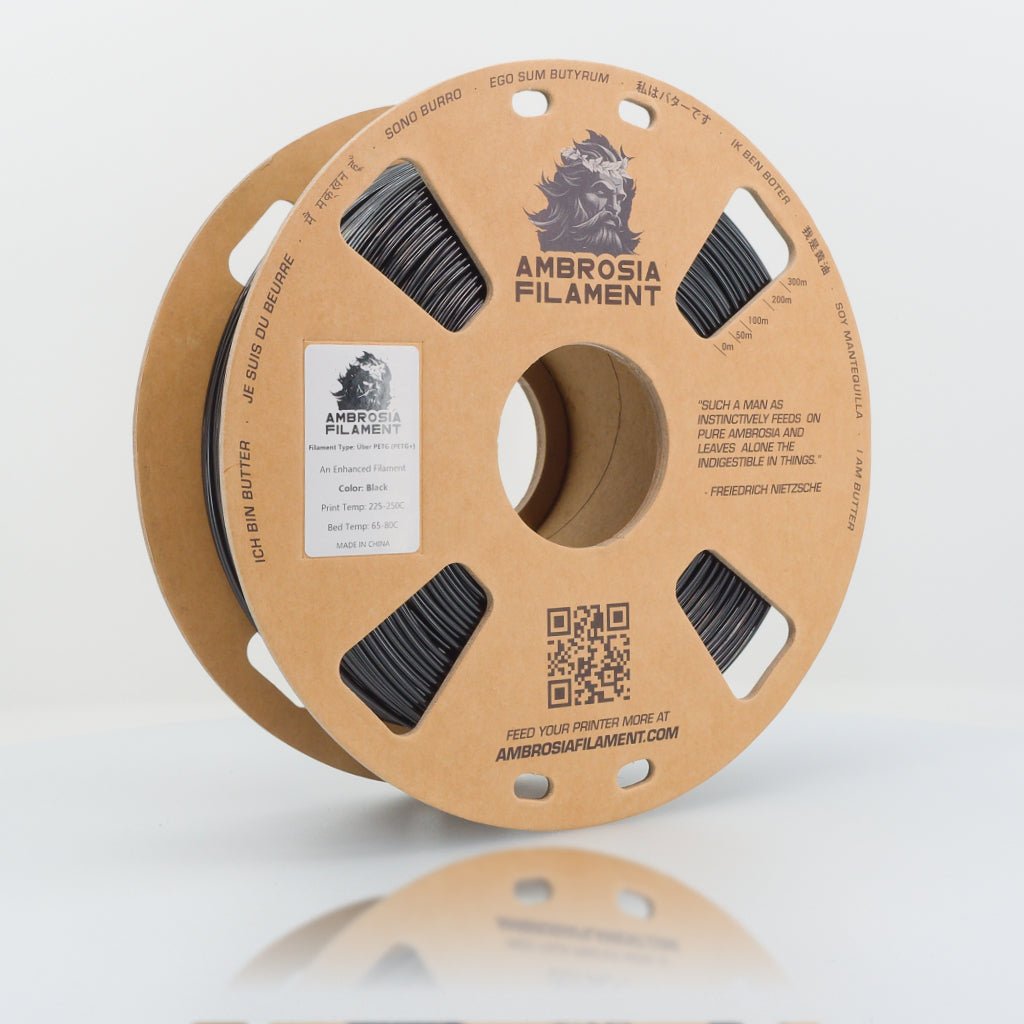
AMBROSIA PETG Filament of the Gods - 1KG Bambu AMS Friendly Cardboard Spools Premium 3D Printing Filament

Feed your Printer the Filament of the Gods. Derived from 100% Virgin Grade-A Non-Toxic pellets. Manufactured to a tighter than standard tolerance (+/- 0.03mm) you'll experience consistent extrusion... Read more
Color:
Specs

Physical Properties

  • Density: 1.27–1.28 g/cm³ (ISO 1183)
  • Melt Flow Rate (250°C / 2.16 kg): 8–12 g/10 min (ISO 1133)

Mechanical Properties

  • Tensile Strength: 41–45 MPa (ISO 527)
  • Elongation at Break: 10–12% (ISO 527)
  • Flexural Modulus: 1400–1500 MPa (ISO 527)
  • Flexural Strength: 64–66 MPa (ISO 178)
  • Impact Strength: 5–6 kJ/m² (ISO 180)

Thermal Dynamic Properties

  • HDT @ 0.455 MPa (66 psi): 68°C (ISO 75)
  • Continuous Use Temperature: 65°C (IEC 60216)
View all
$20.99
This item is fulfilled by a partner store and will ship separately.

About product

Feed your Printer the Filament of the Gods.

Derived from 100% Virgin Grade-A Non-Toxic pellets. Manufactured to a tighter than standard tolerance (+/- 0.03mm) you'll experience consistent extrusion throughout the spool. 

PETG (and PETG+) is a great build material for #D Printing made from the same type of plastics used in plastic bottles. It is one of the most popular 3D printing filaments and has high impact strength, low haze (also can print true clear) and is an easy material to print with. Overall PETG can survive heated elements more than PLA, and is a great 'graduating' material from PLA. While not explicitly required, a heated bed is highly recommended.

The glue holding the filament spool together is rated for an environment of 70C (158F). If using a filament dryer or require the filament spool by placed in an environment exceeding this temperature, we recommend printing a spool clip (here).

Filament can absorb moisture easily. To prevent moisture absorption and contamination, the packing of filament should be kept sealed and in an airtight container with desiccant. 

Disclaimer: Filaments, including this product, may emit toxic fumes (Volatile Organic Compounds) into the air when heated. Please consider this and follow safety protocols when printing with Ambrosia Filament. Only use in a well ventilated area, with proper respiration equipment. Technical Data and Safety Data contained attempts to summarize to the best of our knowledge the properties, health and safety information of the specified product and how to handle it. However, it is your responsibility to determine the suitability for use. Ambrosia Filament provides no warranty and assumes no responsibility or liability for the information contained and expressly disclaims that the information is a representation or guarantee of the specifications, properties, or health and safety data.
Feed your Printer the Filament of the Gods. Derived from 100% Virgin Grade-A Non-Toxic pellets. Manufactured to a tighter than standard tolerance (+/- 0.03mm) you'll experience consistent extrusion throughout the spool.  PETG (and PETG+) is a great build material for #D Printing made from the same type of plastics used in plastic bottles. It is one of the most popular 3D printing filaments and has high impact strength, low haze (also can print true clear) and is an easy material to print with. Overall PETG can survive heated elements more than PLA, and is a great 'graduating' material from PLA. While not explicitly required, a heated bed is highly recommended. The glue holding the filament spool together is rated for an environment of 70C (158F). If using a filament dryer or require the filament spool by placed in an environment exceeding this temperature, we recommend printing a spool clip (here). Filament can absorb moisture easily. To prevent

Feed your Printer the Filament of the Gods.

Derived from 100% Virgin Grade-A Non-Toxic pellets. Manufactured to a tighter than standard tolerance (+/- 0.03mm) you'll experience consistent extrusion throughout the spool. 

PETG (and PETG+) is a great build material for #D Printing made from the same type of plastics used in plastic bottles. It is one of the most popular 3D printing filaments and has high impact strength, low haze (also can print true clear) and is an easy material to print with. Overall PETG can survive heated elements more than PLA, and is a great 'graduating' material from PLA. While not explicitly required, a heated bed is highly recommended.

The glue holding the filament spool together is rated for an environment of 70C (158F). If using a filament dryer or require the filament spool by placed in an environment exceeding this temperature, we recommend printing a spool clip (here).

Filament can absorb moisture easily. To prevent moisture absorption and contamination, the packing of filament should be kept sealed and in an airtight container with desiccant. 

Disclaimer: Filaments, including this product, may emit toxic fumes (Volatile Organic Compounds) into the air when heated. Please consider this and follow safety protocols when printing with Ambrosia Filament. Only use in a well ventilated area, with proper respiration equipment. Technical Data and Safety Data contained attempts to summarize to the best of our knowledge the properties, health and safety information of the specified product and how to handle it. However, it is your responsibility to determine the suitability for use. Ambrosia Filament provides no warranty and assumes no responsibility or liability for the information contained and expressly disclaims that the information is a representation or guarantee of the specifications, properties, or health and safety data.

Specs

Physical Properties

  • Density: 1.27–1.28 g/cm³ (ISO 1183)
  • Melt Flow Rate (250°C / 2.16 kg): 8–12 g/10 min (ISO 1133)

Mechanical Properties

  • Tensile Strength: 41–45 MPa (ISO 527)
  • Elongation at Break: 10–12% (ISO 527)
  • Flexural Modulus: 1400–1500 MPa (ISO 527)
  • Flexural Strength: 64–66 MPa (ISO 178)
  • Impact Strength: 5–6 kJ/m² (ISO 180)

Thermal Dynamic Properties

  • HDT @ 0.455 MPa (66 psi): 68°C (ISO 75)
  • Continuous Use Temperature: 65°C (IEC 60216)

Instructions

Recommended Print Settings

  • Extruder Temperature: 225–260°C [Recommended: 250°C]
  • Heated Bed: 65–80°C [Recommended: 80°C]
  • Build Surface: PEI, glass, BuildTak, or a similar surface [Recommended: Textured PEI] — use a separating layer if printing on smooth PEI.
  • Cooling Fan: 0–70% (range varies by cooling capabilities)
  • Environmental Temperatures: 15–50°C [Recommended: 30°C]

All features

  • Arrives to you in a cardboard box, with filament wound in a cardboard spool, vacuum sealed with a desiccant bag.
  • Derived from 100% Virgin (Grade-A) non-toxic pellets
  • Diameter: 1.75mm (+/-0.03mm)
  • Filament Net Weight: 1KG
  • Spool Weight: 

Reviews